Gold Leaf: The Embossed Color Font for Stunning Visuals
There’s a moment in every design project where you need something to feel luxurious, tactile, and undeniably special. You might be crafting a wedding invitation, designing a logo for a high-end boutique, or creating social media graphics for a new product launch. The text itself needs to do more than just convey information; it needs to make a statement. This is precisely where a typeface like Gold Leaf enters the conversation. It’s not just another font; it’s a design asset that brings a specific, rich texture and dimension to your work, transforming ordinary text into a visual centerpiece.
More Than a Font: Understanding the Embossed Leaf Style
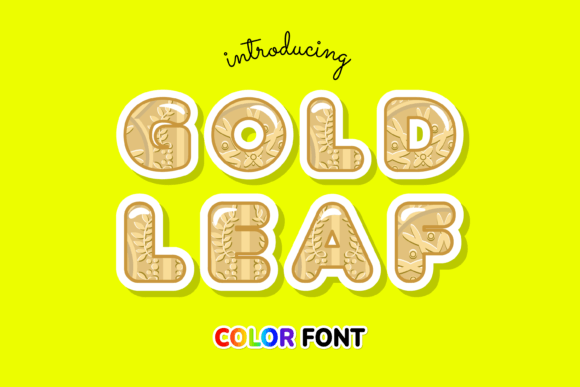
At its core, Gold Leaf is a premium display font that leverages modern typography technology to create a stunning effect. Unlike a standard flat typeface, it’s designed as an Embossed Leaf style. This means each character appears to have a three-dimensional, raised quality, as if it’s been carefully crafted from metallic leaf material. The visual appeal is immediate: it suggests quality, craftsmanship, and a touch of opulence. For designers and creators, this solves a common challenge—how to add a layer of sophisticated texture without spending hours in advanced design software manually creating layer styles or 3D effects. The font does the heavy lifting for you.
It’s crucial to understand that this is a color font, technically an OpenType-SVG font. This format allows the font file itself to contain rich, multi-colored, and textured artwork. When you type with Gold Leaf in a compatible program like Adobe Photoshop or Illustrator, you’re not just selecting a color from a swatch; you’re applying the pre-designed, intricate gold leaf texture to each letterform. This is a game-changer for consistency. Your social media headers, product labels, and website banners will all share the exact same high-fidelity metallic sheen, ensuring a cohesive and professional brand identity.
Practical Applications: Where Gold Leaf Truly Shines
The true value of any design asset lies in its versatility. A beautiful font is only useful if it can be applied effectively across different mediums. Gold Leaf excels in contexts where you want to draw the eye and communicate value instantly. Think about packaging design for artisanal goods, cosmetics, or gourmet foods. A label that uses this font doesn’t just say "Premium Chocolate"; it shows it. The embossed leaf effect can make a product feel more substantial and gift-worthy on the shelf, directly influencing a customer's perception and purchasing decision.
In the realm of branding and logo design, this typeface can serve as a powerful accent. It’s often too detailed for body copy, but for a logotype, monogram, or a key tagline, it can define a brand’s personality. A jewelry designer, a luxury real estate agent, or a boutique event planner could use it to establish an immediate sense of elegance and exclusivity. Similarly, for editorial design in magazines or lookbooks, using Gold Leaf for drop caps or pull quotes can break up text layouts and add a layer of visual interest that keeps readers engaged.
Don’t overlook its power in digital spaces. Social media graphics are fiercely competitive. A Instagram story or a Pinterest pin featuring text with a realistic gold leaf texture can stop the scroll. It adds a tactile, almost physical quality to a flat screen, making your content more memorable. For bloggers and content creators, it’s perfect for designing standout featured images, newsletter headers, or even the title of a digital product like an e-book or a course, signaling its premium content from the first glance.
Integrating Gold Leaf into Your Design Workflow
Adopting a new font, especially a specialized one, requires a bit of strategy. The first step is always to check compatibility. As noted, this is an OpenType-SVG font, which works seamlessly in PhotoShop, Illustrator, Silhouette, and Inkscape. However, it’s important to note the limitation for Cricut users—the standard OTF/TTF files are not compatible. This highlights the importance of always reviewing the included font files and licensing before purchasing any design asset. Understanding these technical boundaries upfront prevents frustration and ensures the font will work for your intended application, whether it’s for personal crafts or commercial projects.
One of the most common questions with a decorative font is: what do I pair it with? Because Gold Leaf has such a strong, textured personality, it demands a simpler companion. The principle of contrast is your best friend here. Pair it with a clean, neutral sans serif font for body text or supporting information. Think of fonts like Helvetica, Arial, or a modern geometric sans serif. This creates a beautiful balance where the gold leaf text becomes the undeniable star, while the accompanying text remains highly readable. Avoid pairing it with other ornate script or handwritten fonts, as this can quickly lead to visual clutter and a loss of hierarchy.
Readability is another key consideration. This is fundamentally a display font, designed for headlines, titles, and short bursts of text. Using it for a full paragraph would not only be difficult to read but would also diminish its special effect. The magic of the embossed leaf is in its impact, which is best achieved in smaller, focused doses. Test it at various sizes in your design software to see how the detail holds up. On a large poster, the texture will be visible and impressive. On a small mobile screen, ensure the letters are still distinct and legible.
Elevating Your Projects with Intentional Typography
Ultimately, the goal of any creative font is to serve the project's communication goals. Choosing Gold Leaf isn’t just about liking how it looks; it’s about recognizing that its personality aligns with your message. If your project aims to convey luxury, celebration, achievement, or artisanal quality, this typeface can be a perfect match. It’s a tool for brand recognition, helping to create a visual signature that your audience will come to associate with a certain standard of quality.
Think of your typography as part of your broader design system. Just as you have a color palette and a style for your imagery, your fonts define your voice. Incorporating a premium font like Gold Leaf into your toolkit allows you to quickly add a layer of sophistication when the situation calls for it. For a small business owner, this could mean using it for holiday sale announcements or VIP customer communications. For a marketer, it could be the key to making a whitepaper or webinar invite feel more valuable and worth the click.
Before you finalize any design, always take the step to review the full set of included font styles and characters. Some premium fonts come with alternates, ligatures, or special glyphs that can add even more uniqueness to your work. And critically, understand the commercial licensing that comes with the font. Most reputable font licenses allow for use in digital and physical products for sale, but it’s your responsibility to ensure your specific use case is covered, especially for merchandise or large-scale distribution.
In the end, Gold Leaf is more than just a set of letters. It’s a bridge between a digital file and a feeling—the feeling of something crafted, valuable, and visually rich. By applying it thoughtfully and in the right contexts, you can leverage its unique texture to make your designs not just seen, but felt, giving your projects a distinct and memorable voice in a crowded visual landscape.