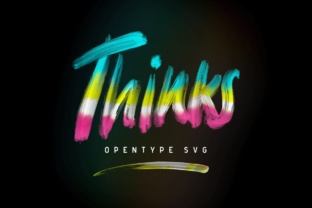
Thinks Opentype: The Hyper-Realistic Font for Bold Branding
There’s a specific kind of frustration that hits when you spend hours trying to digitize a hand-lettered logo, only to end up with something that looks flat, sterile, and lifeless. You know the feeling—you’ve got this vision for a brand that feels organic, textured, and raw, but standard vector fonts just can’t capture that energy. Enter Thinks Opentype. If you have ever wished your digital typography could look exactly like the ink you just brushed onto paper, this is the tool you’ve been waiting for. It isn't just another typeface; it is a collection of high-resolution brush stroke images embedded directly into the font file, offering a level of definition that standard vectors simply cannot match.
For designers, entrepreneurs, and content creators, the visual language of a brand is its first handshake with the audience. We are moving past the era of safe, corporate minimalism and into a space where authenticity wins. People crave texture. They want to see the human hand behind the design. However, creating that look usually requires advanced illustration skills or expensive custom lettering services. This is where modern typography is changing the game. By utilizing the OpenType-SVG format, Thinks Opentype allows you to access hyper-realistic textures instantly. It brings the warmth of analog art into a digital workflow, saving you time while dramatically elevating the quality of your visual assets.
The Power of Texture in Visual Communication
Why does a font like Thinks Opentype matter so much for your projects? It comes down to "thumb-stopping" power. On a crowded Instagram feed or a busy retail shelf, smooth, generic text often blends into the background. A gritty, ink-heavy brush font, however, creates immediate visual interest. It suggests movement, energy, and personality. This premium font is designed to grab attention not through shouting, but through intricate detail. When you zoom in on the letterforms, you don't see jagged pixels or clean curves; you see the fibers of a brush, the variation in ink density, and the raw beauty of a hand-drawn stroke.
This level of detail is particularly vital for specific industries. If you are running a coffee roastery, a streetwear brand, or an outdoor adventure blog, your typography needs to feel grounded and earthy. Thinks Opentype fits these niches perfectly. It communicates ruggedness and craftsmanship without saying a word. It’s an ideal choice for brand identity work where the goal is to appear approachable yet high-end. The visual consistency provided by having such a distinct, high-quality typeface ensures that your branding remains memorable across different touchpoints.
Practical Applications: From Packaging to Social Media
While the artistic appeal is obvious, the practical utility of a display font like this is where the real value lies for business owners and creatives. Because the font relies on high-resolution imagery, it shines brightest in static, high-quality outputs. Think about packaging design. Imagine a craft beer label or a natural skincare bottle where the product name is rendered in Thinks Opentype. The texture mimics the artisanal quality of the product inside, creating a cohesive story between the container and the contents.
For those in the digital space, this typeface is a powerhouse for social media graphics. It works exceptionally well for short, punchy headlines in Instagram Stories, YouTube thumbnails, or Pinterest pins. Because it is so visually distinct, it helps in building brand recognition—your followers will start to recognize the font style as part of your visual signature before they even read the caption. It’s also an excellent choice for invitations and event posters, where you need to evoke a specific mood, such as a rustic wedding, a music festival, or a creative workshop.
Furthermore, consider the realm of digital products. If you sell planners, wall art, or quote cards on platforms like Etsy, using a font that looks like actual hand-lettering adds perceived value to your product. Customers are paying for that aesthetic, and Thinks Opentype delivers a result that looks like it was made by a professional calligrapher. It bridges the gap between graphic design and fine art.
Navigating the Technical Landscape
As with any advanced design tool, understanding the technical requirements is crucial to getting the most out of Thinks Opentype. The most important thing to know is that this is an OpenType-SVG font. This format preserves the high-resolution image data of the brush strokes. Because of this, compatibility is key. You will need Adobe Photoshop CC 2017 or newer to access the full functionality of the font. In Photoshop, the letters will appear with their intended gritty, realistic texture.
It is also vital to understand where this font cannot be used, specifically regarding Cricut and other cutting machines. The OTF and TTF files provided are not compatible with Cricut software. This is a common point of confusion for crafters. If you try to use this font to cut out vinyl letters, the machine will not be able to read the complex image data correctly. This font is strictly for digital rendering and print design. Keeping this in mind will save you a headache and ensure your workflow remains smooth. Always test your font pairings in the correct software environment before finalizing a design.
Pairing and Readability: A Designer’s Guide
Because Thinks Opentype is a bold, expressive display font, it demands a companion that knows how to play second fiddle. You generally wouldn't use a textured brush font for long paragraphs of body text; the visual noise would make it difficult to read, and the file size of the images would slow down a website. Instead, this font is built for headlines, logos, and pull quotes.
To achieve a balanced layout, pair it with a clean sans serif font or a simple serif font. For example, if you are designing a menu for a trendy cafe, use Thinks Opentype for the section headers like "Breakfast" or "Cocktails," and use a legible sans serif like Helvetica or Open Sans for the item descriptions and prices. This contrast creates a hierarchy that guides the reader's eye naturally. The textured font grabs attention, and the clean font conveys the information.
When choosing colors, this typeface looks stunning on textured backgrounds, such as kraft paper or concrete, but it also pops beautifully against solid, contrasting colors. Because the font contains actual image data, it reacts to color overlays differently than standard vectors. Be sure to experiment with layer styles in Photoshop to see how it interacts with your specific brand palette.
Making the Investment Work for You
Investing in a premium font is an investment in your brand's perception. Free fonts often come with licensing restrictions or lack the refinement needed for commercial projects. With Thinks Opentype, you are acquiring a professional-grade design asset. Whether you are a small business owner revamping your logo, a content creator designing merchandise, or a freelance designer working on client packaging, the versatility of this typeface allows it to adapt to various creative needs.
Remember to review the licensing terms to ensure they cover your specific usage, especially if you are creating items for resale. The goal is to use this tool to create work that looks professional, polished, and distinct. By incorporating Thinks Opentype into your toolkit, you aren't just downloading a font; you are unlocking a new way to present your ideas with the authenticity and detail they deserve. It’s time to stop settling for flat text and start creating designs that truly feel alive.