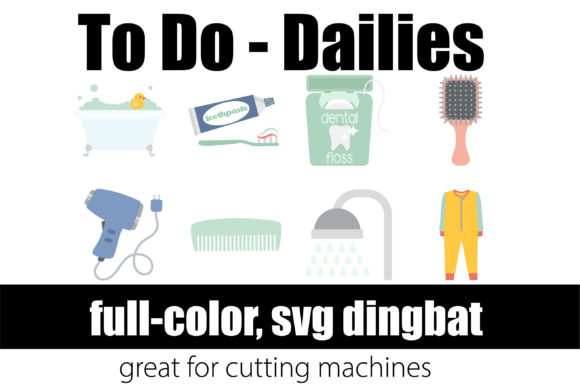
Bring Energy to Your Branding with To Do - Dailies
If you have ever found yourself scrolling through endless lists of neutral sans-serifs and traditional serifs, feeling like your project needs a shot of adrenaline rather than just "clean lines," you are likely in the market for something with a bit more personality. There is a fine line between a design that looks professional and one that looks boring, and often, the differentiator is typography. We are used to seeing color applied to text in post-production, but having a font that arrives with color and texture built into its DNA changes the game entirely. This is where To Do - Dailies enters the conversation, offering a distinct, handcrafted aesthetic that bridges the gap between casual creativity and polished graphic design.
To put it simply, To Do - Dailies is not just another typeface; it is a creative tool designed to mimic the authentic look of hand-lettering combined with vibrant, pre-set color gradients. Because it is a color font (technically formatted as OpenType-SVG), it renders with high-fidelity detail directly within your design software. This means you get the subtle shading, the ink-like texture, and the multi-tonal hues without needing to layer multiple text boxes or apply complex clipping masks. It is designed for the creator who wants their typography to feel immediate, energetic, and human. Whether you are a small business owner trying to stand out in a crowded market or a designer looking for a unique asset, this typeface offers a refreshing departure from the standard black-and-white text we see every day.
Understanding the "Color Font" Advantage
Before diving into specific use cases, it is helpful to understand exactly what you are working with. Traditional fonts are vector-based, meaning they are usually a single, flat color that you can change to anything you like. A color font like To Do - Dailies, however, contains bitmap data within the font file itself. This allows the letters to have internal details—like brush strokes, gradients, and texture—that a standard vector font simply cannot achieve.
What does this mean for your workflow? It means instant complexity. If you are working in Adobe Photoshop, Illustrator, or even Silhouette, you can type out a headline and immediately see a result that looks like it took an hour to create manually. It is a premium font experience that saves you time while elevating the visual quality of your work. However, it is important to note the technical requirements: while it works seamlessly in professional design suites, the OTF and TTF files are not compatible with Cricut machines. If you are a crafter, this is best used for print-and-cut projects or digital designs rather than single-line cutting paths.
Practical Applications for Modern Creators
The versatility of a font like this lies in its ability to grab attention. In a world of endless scrolling, stopping the thumb is the hardest part of marketing. Here is how To Do - Dailies fits into various creative and commercial workflows:
Digital Marketing and Social Media: On platforms like Instagram or Pinterest, visuals are currency. A standard serif font can sometimes get lost in a busy photo background. Using a color font for your quotes, announcements, or sale graphics adds an immediate layer of depth. It works exceptionally well for "Stories" or Reels covers where you need a punchy, readable headline that feels personal rather than corporate.
Logo Design and Brand Identity: For brands that want to position themselves as approachable, fun, or artisanal, this typeface is a strong contender. Imagine a coffee shop menu, a boutique clothing label, or a podcast cover art. The textured, colorful nature of the font conveys a sense of craftsmanship. It suggests that there is a human behind the brand, which is a massive driver of consumer trust today.
Editorial and Packaging Design: If you are designing a magazine layout or product packaging, hierarchy is key. You need your headlines to pop off the page. Because To Do - Dailies is a display font, it commands attention. It pairs beautifully with clean, minimal sans-serif fonts for body text. The contrast between a textured, colorful headline and a crisp, black body copy creates a professional dynamic that guides the reader's eye exactly where you want it to go.
Pairing and Professional Presentation
One of the most common mistakes in design is using a "novelty" font for everything. While To Do - Dailies is adaptable, its true power is unleashed when paired correctly. Because it has a strong personality, it acts as the "voice" of your design, while your secondary font should act as the "narrator."
For example, if you are creating a wedding invitation, you might use To Do - Dailies for the couple's names to give it that celebratory, hand-lettered feel. For the venue details and RSVP information, switch to a legible sans-serif or a delicate serif font. This ensures that while the design is beautiful, the critical information remains easy to read.
When testing your font pairings, pay close attention to scale. Display fonts often look best at larger sizes. If you try to shrink To Do - Dailies down to 10pt for a paragraph, the intricate details of the color rendering might become muddy or difficult to read. Always reserve this typeface for headers, titles, and focal points where it can breathe.
Technical Considerations and Workflow Tips
Adopting new design assets requires a bit of adaptability. Since To Do - Dailies is an OpenType-SVG file, you might notice that the file size is slightly larger than a standard font. This is normal, as it contains the pixel data required to render the colors and textures.
If you are using this for a branding project, consider the color palette of the font as part of your broader system. While the font comes with its own distinct colors, in software like Photoshop, you can often apply color overlays or adjustments to change the hue, though this may alter the texture slightly depending on your blending modes. It is always best to test how the default colors interact with your background. For instance, a dark textured background might require a lighter variation of the font, or a drop shadow effect to ensure legibility.
Also, consider the commercial licensing. If you are a freelance designer creating assets for a client, or a small business owner using it on merchandise you intend to sell, ensure you are adhering to the licensing terms. A high-quality typeface is an investment in your intellectual property, and respecting the license protects both you and the font creator.
Injecting Personality into Your Projects
Ultimately, the goal of design is communication. We choose specific typefaces to evoke specific emotions. A rigid, geometric font might say "efficiency" and "tech," whereas To Do - Dailies says "creativity," "energy," and "authenticity."
Do not be afraid to experiment with this asset in unexpected places. Try it on a website hero section to break the monotony of corporate web design. Use it on a t-shirt mockup to see how the texture translates to fabric. Apply it to a digital planner cover to make your product listings stand out.
When you incorporate a tool like To Do - Dailies into your toolkit, you are doing more than just installing a font; you are expanding your creative vocabulary. It allows you to produce work that feels current, tactile, and visually rich without requiring advanced illustration skills. Whether you are designing a one-off flyer or a comprehensive brand identity, having a reliable, stylish color font at your disposal ensures that your work will not only be seen but remembered. So go ahead, open up your design software, and let the text do the talking.